

Marilyn Geewax
Marilyn Geewax is a contributor to NPR.
Before leaving NPR, she served as senior business news editor, assigning and editing stories for radio. In that role she also wrote and edited for the NPR web site, and regularly discussed economic issues on the mid-day show Here & Now from NPR and WBUR. Following the 2016 presidential election, she coordinated coverage of the Trump family business interests.
Before joining NPR in 2008, Geewax served as the national economics correspondent for Cox Newspapers' Washington Bureau. Before that, she worked at Cox's flagship paper, the Atlanta Journal-Constitution, first as a business reporter and then as a columnist and editorial board member. She got her start as a business reporter for the Akron Beacon Journal.
Over the years, she has filed news stories from China, Japan, South Africa, and Europe. She helped edit coverage for NPR that won the Edward R. Murrow Award and Heywood Broun Award.
Geewax was a Nieman Fellow at Harvard, where she studied economics and international relations. She earned a master's degree at Georgetown University, focusing on international economic affairs, and has a bachelor's degree from The Ohio State University.
She is the former vice chair of the National Press Club's Board of Governors, and currently serves on the board of the Society of American Business Editors and Writers.
-
 Marilyn Geewax, who recently retired as an NPR business editor, returned to Ohio for her class's 45th reunion. The visit showed how things changed dramatically for retirees in just one generation.
 -
President Trump is proposing a budget plan that gives up the fight against deficit spending, which has long been a Republican goal. But Trump's budget concedes that goal; tax revenues will not catch up to spending as far as the eye can see.
-
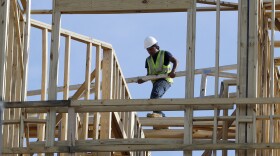 The U.S. economy expanded at a decent pace in the final months of 2017. But most economists had been expecting stronger growth. This dashed hopes for three straight quarters of growth above 3 percent.
 -
 Trump has continued to own a business empire while serving as president — thus showing that expectations about handling presidential wealth, businesses and brands were about norms, not laws.
 -
 Economists and market analysts are optimistic about the outlook for the new year. Most are predicting continued job growth, rising stock prices and healthy profits. But slow wage growth could hurt.
 -
 The Great Recession began exactly one decade ago this month. Although the economy has been growing steadily for years, the downturn's impact is still deeply felt by millions who lost homes and jobs.
 -
 Surging consumer confidence is spurring sales for Halloween. Retailers are forecasting an 8 percent increase in sales for costumes, candy and decorations. Those gains are strong given low inflation.
 -
 For months, the United States, Canada and Mexico have been trying to rewrite terms of the North American Free Trade Agreement. But White House demands have led to frustrations that may threaten NAFTA.
 -
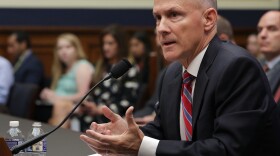 Equifax's former CEO Richard Smith and Wells Fargo CEO Tim Sloan both said "sorry" for the harm their companies have inflicted on consumers. But lawmakers scolded them in two different hearings.
 -
 The recent enormous storms have hit the industry hard, with several signs turning negative. But economists expect a rebound when the weather improves.


